
Netrunner has had a rare kind of tabletop afterlife. It launched as a sharp, asymmetric cyberpunk card game in the ’90s, disappeared, returned as a beloved reboot in the 2010s, and then—when licensing ended—kept going anyway because the community rebuilt the infrastructure needed to keep a competitive card game healthy.
This is the clean timeline: the original 1996 game, Fantasy Flight Games’ Android: Netrunner era, and the modern Null Signal Games era that most people mean when they talk about “Netrunner today.”
1996–1999: The original Netrunner (Wizards of the Coast)
Netrunner started life as a collectible card game in 1996, designed by Richard Garfield (the designer of Magic: The Gathering) and published by Wizards of the Coast. The DNA that makes Netrunner special was already fully formed:
- One player is the Corp, installing ICE, creating remote servers, and trying to score agendas.
- The other is the Runner, building a rig, applying pressure, and choosing when to risk a run.
That asymmetry created a tension most card games still struggle to replicate. Every turn is part bluff, part tempo puzzle, part risk management. You’re not just playing your cards—you’re playing what your opponent thinks your cards are.
The original setting: Cyberpunk roots
The 1996 game drew from the broader cyberpunk tradition and was connected to the Cyberpunk RPG world that shaped its tone: edgy megacorps, digital crime, high-stakes intrusion, and a gritty “future noir” vibe. That’s why longtime fans sometimes distinguish between “classic Netrunner” flavor and the later Android universe.
Why it ended
The original run ended in 1999. Like a lot of great games from that era, it faced an uphill battle in a market dominated by bigger collectible ecosystems and retail realities. But it never really disappeared—players kept talking about it as a design landmark, the “best game you can’t easily buy.”
2012–2018: Android: Netrunner (Fantasy Flight Games’ reboot)
In 2012, Fantasy Flight Games relaunched the game as Android: Netrunner, moving it into Fantasy Flight’s Android setting and making one change that defined the entire era:
The Living Card Game model
Android: Netrunner wasn’t a randomized booster CCG. It was a Living Card Game (LCG), meaning expansions had fixed contents. You didn’t chase rares or buy boxes hoping to open staples. You bought packs and knew exactly what you were getting.
That one structural decision helped Netrunner thrive competitively because:
- new players could build real decks without gambling on availability,
- tournament metas evolved in a more predictable, stable way,
- and the “collection barrier” was much more manageable than most competitive card games.
Why the Android setting mattered
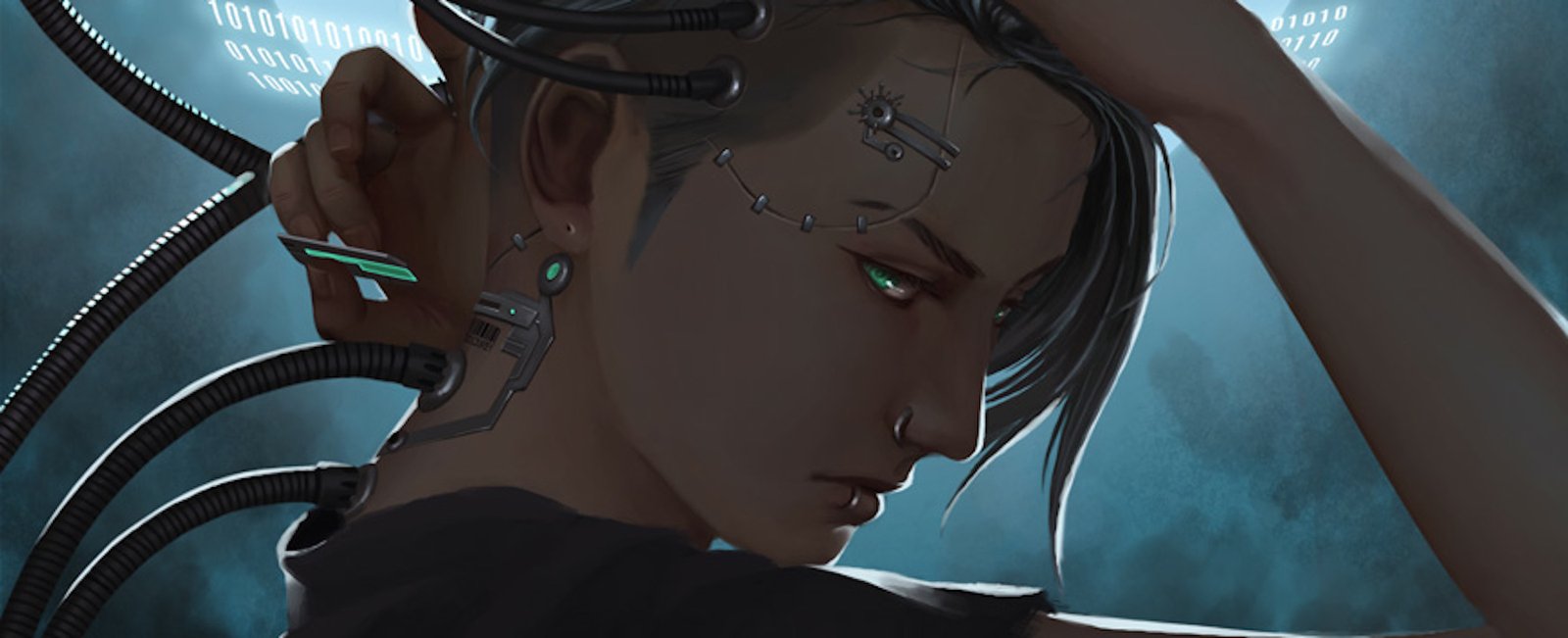
Fantasy Flight didn’t just slap new names on old mechanics. The Android universe gave Netrunner an identity with a distinct mood: megacorporate power, inequality, transhuman bodies, near-future politics, and global cyber-noir. The art direction—especially compared to a lot of sci-fi dystopia—helped the game stand out culturally and aesthetically, not just mechanically.
The end of the official FFG era
In 2018, Fantasy Flight announced that Android: Netrunner products would stop being offered for sale after a specific date due to licensing ending. That announcement effectively closed the official product pipeline: no more expansions, no more organized play support from the publisher, and a growing scarcity for anyone trying to collect the full card pool later.
For many games, that’s where the story ends.
Netrunner’s didn’t.
2018–2022: The community continuation (Project NISEI)
When the official line ended, the player base responded unusually fast and unusually well. A community-run organization emerged to keep Netrunner alive—initially focusing on the things that make a game playable long-term even without new official product:
- rules stewardship and clarity,
- banlists / restrictions,
- organized play structure,
- new player on-ramps,
- and eventually: new cards.
The “new core” idea
A major problem post-discontinuation was practical: the best learning sets were hard to get, and the “recommended” entry point didn’t match the needs of new players. One of the big community answers was to create a curated, modern “core experience” that could function as a stable foundation for learning and play.
This period is what many people casually mean when they say “the reboot”: not a reboot of lore, but a reboot of support, infrastructure, and eventually content.
2022–today: Null Signal Games and modern Netrunner
In 2022, the organization rebranded as Null Signal Games. The name change matters, but the bigger point is what they represent now: an ongoing publisher-like entity for Netrunner, driven by the community, producing new material and supporting organized play.
What the Null Signal era looks like
Modern Netrunner under Null Signal is not just “keeping the lights on.” It’s a living ecosystem with:
New original releases
Null Signal creates and publishes new sets designed to be compatible with the broader Android: Netrunner lineage (while also working as a modern experience on its own).
Active stewardship
Formats, rules updates, organized play policies, and card pool management are part of the job. In other words: the unglamorous work that keeps a competitive game from collapsing into chaos.
Accessibility-first distribution
Null Signal supports multiple ways to get cards, including print-and-play files and print-on-demand pathways, recognizing the reality that availability is the difference between “healthy community” and “discord full of people asking where to buy anything.”
Proxy-friendly organized play stance
One of the modern philosophical shifts is openness: if the goal is playing the game, enabling participation matters. Null Signal’s approach reflects that—reducing the friction that traditionally locks people out of older competitive card games.
The modern on-ramp: System Gateway
If you want the simplest “start here” answer in the modern era, Null Signal built a dedicated entry product designed for how people learn today: clear teaching structure, coherent early deckbuilding, and a path from tutorial play into “real Netrunner” decision-making.
It’s essentially the modern equivalent of a core set—but built with years of hindsight and aimed at making the first few sessions feel great, not just historically accurate.
A quick note: “Reboot Project” vs “reboot era”
There’s a small point of confusion that comes up in Netrunner circles:
- Many people use “the reboot” to mean the post-FFG community continuation (NISEI → Null Signal).
- There is also a separate fan initiative literally called the Reboot Project, focused on rebalancing parts of the early Android: Netrunner card pool.
Both exist in the same community space, but they are not the same thing.
Where Netrunner stands now
If you zoom out, Netrunner has effectively lived three lives:
- 1996–1999: the original collectible Netrunner—innovative, asymmetric, and ahead of its time.
- 2012–2018: Android: Netrunner—Fantasy Flight’s LCG reboot and a modern classic, ended by licensing.
- 2018–present: the community continuation—first under NISEI, now as Null Signal Games, with new products, organized play, and a modern entry path.
That third era is the rare one: a game that stayed alive not because a company decided it should, but because a community built the structures needed to make it sustainable.