

Sideboarding for new players can feel weird at first. You build a 60-card deck, you shuffle up, and then suddenly you’re allowed to swap cards around like you’re editing history. But sideboarding is just your chance to fix problems you learned about in Game 1. That’s it. You’re not “becoming a new deck.” You’re tuning your deck for a matchup.
If you’re playing best-of-three (BO3), sideboarding is one of the biggest ways you gain win percentage without needing perfect play. And yeah, it’s also the part where most newer players accidentally make their deck worse. Let’s stop doing that.
What a sideboard is (and when you can use it)
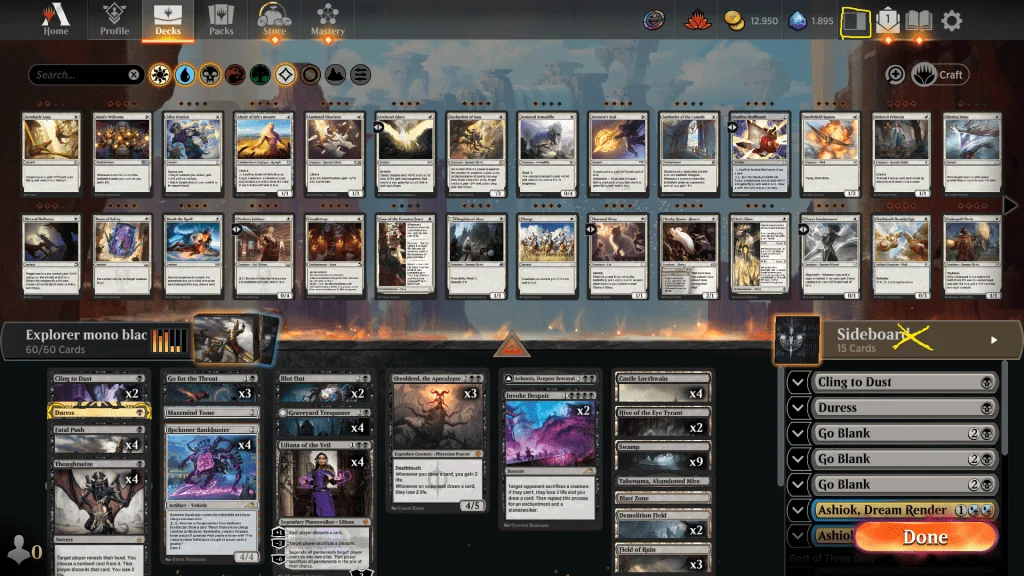
A sideboard is a separate pile of cards you can use to modify your main deck between games in a match. Most Constructed formats allow up to 15 sideboard cards. You don’t have to swap one-for-one, but your deck still has to be legal before each game starts. And you’re expected to return your deck and sideboard to their original setup before the next match.
Sideboarding for new players is easiest when you keep the goal simple: make your deck better against what you expect next, not just what you saw.
The basic sideboarding process (cards in, cards out)
Here’s the core loop:
You lose to something (or barely win) in Game 1.
You ask: “What is actually killing me?”
Then you bring in cards that answer that thing, and you cut cards that are bad in that matchup.
Two important notes:
- Don’t sideboard emotionally. “That card annoyed me” is not a reason. “That card is a problem I cannot beat” is a reason.
- Don’t dilute your plan. If your deck wins by applying pressure, don’t board into a slow pile of random answers and hope it works out.
A simple rule that helps sideboarding for new players:
Bring in answers that matter, cut your worst cards, and keep your deck doing its thing.
On the play vs on the draw
This is the first “advanced” concept that’s actually easy.
- On the play, you can often keep slightly slower cards because you get to deploy first.
- On the draw, you usually want lower curve, cheaper interaction, or more early defense because you’re behind a turn.
Even one swap can matter. Example: on the draw against aggro, you might cut a clunky 4-drop and bring in a cheap removal spell or life gain card.
Build a beginner-friendly sideboard (flexible answers first)
A lot of new players fill a sideboard with super narrow “gotcha” cards. That can work, but it’s also how you end up with 15 cards you never bring in.
If you’re new, aim for a mix of:
- General interaction: removal that hits multiple permanent types, sweepers, counterspells, discard
- Graveyard hate: for reanimator, delve, recursion, “I swear it’s not a combo deck” decks
- Artifact and enchantment removal: because some matchups are basically “can you remove this one thing?”
- Anti-aggro tools: life gain, cheap blockers, extra early removal
- Anti-control tools: resilient threats, hand disruption, cards that punish slow decks
- Mirror breakers: a few cards that matter in the matchup you expect to face most
Sideboarding for new players goes way smoother when your sideboard cards are easy to justify. If you can’t explain why a card is in your sideboard, it probably shouldn’t be there.
Make a sideboard plan (without writing a novel)
You don’t need a 12-page sideboard guide. But you do want a plan.
Try this: pick the 5 decks you expect to face (or the 5 “styles” of decks).
- Aggro (fast creatures, burn)
- Control (counterspells, sweepers, card draw)
- Midrange (efficient threats and removal)
- Combo (one big turn, or one big engine)
- Graveyard / artifact / enchantment engines (value loops)
For each one, write one sentence:
- “Against aggro, I want more cheap removal and life gain. I cut slow card draw and expensive win-more cards.”
- “Against control, I want threats that don’t die to one removal spell and maybe discard. I cut dead creature removal.”
That’s enough to start.
And here’s the honest truth: your first few sideboard plans will be wrong. That’s normal. Sideboarding for new players is mostly about learning what matters, then tightening it over time.
Common sideboarding mistakes (aka how we throw games away)
Over-sideboarding
This is the big one. You bring in 8 cards, cut 8 cards, and now your deck doesn’t function. You “have answers,” but you don’t draw them in time, or you can’t close the game because you boarded out your win conditions.
If you’re unsure, start small. Bring in 3 to 5 cards. See if it helps.
Sideboarding against Game 1 only
Game 2 is different. Your opponent will sideboard too. If they’re smart, they’re changing how they attack you. So you need to think, “What are they likely to bring in?” and “What will they cut?”
Example: if you’re a creature deck vs control, they might bring in more sweepers. That can change whether you want to commit to the board early or hold back.

Cutting the wrong cards
A clean way to decide cuts:
- Cut cards that are too slow
- Cut cards that are dead (no targets)
- Cut cards that are redundant (you don’t need all 4 of a narrow effect post-board)
Don’t cut your deck’s main engine unless the matchup forces it.
Sideboarding in Limited and MTG Arena (quick notes)
Limited sideboarding can be very different because your “sideboard” is basically your unused pool. You can swap more freely, and you might adjust your deck based on what bombs or removal you saw.
Arena also changes the story:
- Best-of-one (BO1) often uses a “hand smoother” and has no sideboards in most queues, so your maindeck needs broader answers.
- BO3 on Arena works like paper sideboarding, so the same concepts apply.
Sideboarding for new players is usually easiest to practice in BO3, because you get immediate feedback: you board cards in, and you see if they mattered.
A simple “before you shuffle” checklist
This is boring, but it saves you.
- Count your deck. Is it legal?
- Count your sideboard. Did you leave extra cards mixed in?
- Did you accidentally forget to unsideboard from last round?
Yes, people lose matches for this. And it feels awful.
Two helpful reads on PrintMTG (for testing and prep)
If you’re practicing matchups and you need reps fast, proxies help. And deckbuilding tools help you track changes without losing your mind.
- How to Make MTG Proxies
- The Best Magic the Gathering Tools for Research, Deck Building, Proxies, and More
Conclusion
Sideboarding for new players is really just structured problem-solving. Identify what matters, bring in cards that fix it, cut cards that don’t help, and don’t wreck your own game plan. Keep your swaps small until you understand the matchup. Then iterate.
And if you ever feel lost, remember: you’re not trying to build the perfect 75 overnight. You’re trying to make the next game a little better than the last one.