

If you hang around proxy-heavy Commander tables long enough, you’ll hear the same name pop up when someone asks, “okay, but who makes the nice ones?” This ProxyKing.biz review is about that reputation. Not the hype. The actual reasons ProxyKing keeps getting labeled “top quality” (especially for a US-based seller), and the tradeoffs you should expect.
I’m going to focus on the stuff that matters in real play: readability, shuffle feel, cut consistency, finishes, and how often people report “these blend fine in sleeves” versus “my deck now has three suspicious rectangles.”
What ProxyKing.biz is
ProxyKing is a storefront-style proxy shop, not a “print your whole deck from a list” tool. You browse, add individual cards or bundles, and order like any other online store.
That matters because ProxyKing’s whole thing is “high realism per card,” not “lowest possible cost per deck.” If you’re trying to proxy one or two expensive staples, a set of fetches, a mana base bundle, or a couple Reserved List stand-ins, this model makes sense. If you’re trying to proxy 100 cards at once, you’re probably going to feel the price.
ProxyKing.biz review: what “highest quality” actually means
When people say “highest quality proxies,” they usually mean some mix of:
- Crisp text (no fuzzy rules box, no muddied mana symbols)
- Accurate-looking color and contrast (especially blacks, borders, and gradients)
- Consistent sizing and thickness (so your deck doesn’t feel marked)
- Clean cuts and corners (centering that doesn’t scream “home print project”)
- A finish that shuffles normally (not tacky, not weirdly glossy)
- Details that land (holo stamp placement, foils not looking like a disco ball)
ProxyKing leans hard into those points, and they say so directly. They also acknowledge a thing proxy buyers rarely hear out loud: minor variation between print runs can happen, and they recommend sleeves anyway. That’s an honest admission, and it’s one of the reasons people take them seriously.
The materials and print process (the big reason the cards feel “real”)
ProxyKing says they print on premium German black-core playing-card stock, using direct printing (no sticker overlays), and keep to standard MTG sizing so the cards sleeve and shuffle cleanly. They also state they do not print official card backs, and their backs are designed to be clearly non-official.
That combo explains a lot of the “these feel legit in hand” reputation:
- Black core stock helps with stiffness, opacity, and that familiar trading-card snap.
- Direct printing avoids the “laminated sticker” feel that some cheap proxies have.
- Standard sizing is the difference between “fine in sleeves” and “my deck is now self-marked.”
They also claim high-end print capability (multi-ink, high resolution, wide color gamut), and frame their process as detail-driven recreation rather than quick scans.
Print clarity and readability (the part that actually wins games)
A proxy can look great in a product photo and still be annoying to play with. The real test is: can you read it instantly from normal sitting distance?
ProxyKing’s positioning is all about readable, crisp output: sharp text, clean lines, and consistent results across a batch. In practice, this is where higher-end proxies separate themselves. If the rules text is mush, you end up phone-checking the card every time, and that’s a gameplay tax.
From community reviews, ProxyKing frequently gets praised for:
- Border symmetry and centering that’s “close enough” in sleeves
- Saturation that looks right for many staples
- Holo stamp placement that doesn’t look random
But you’ll also see reports of occasional misses: a card that’s washed out, too dark, or slightly off-center. That’s not unique to ProxyKing, but it’s part of the honest picture.
Cut consistency and corner rounding (the silent dealbreaker)
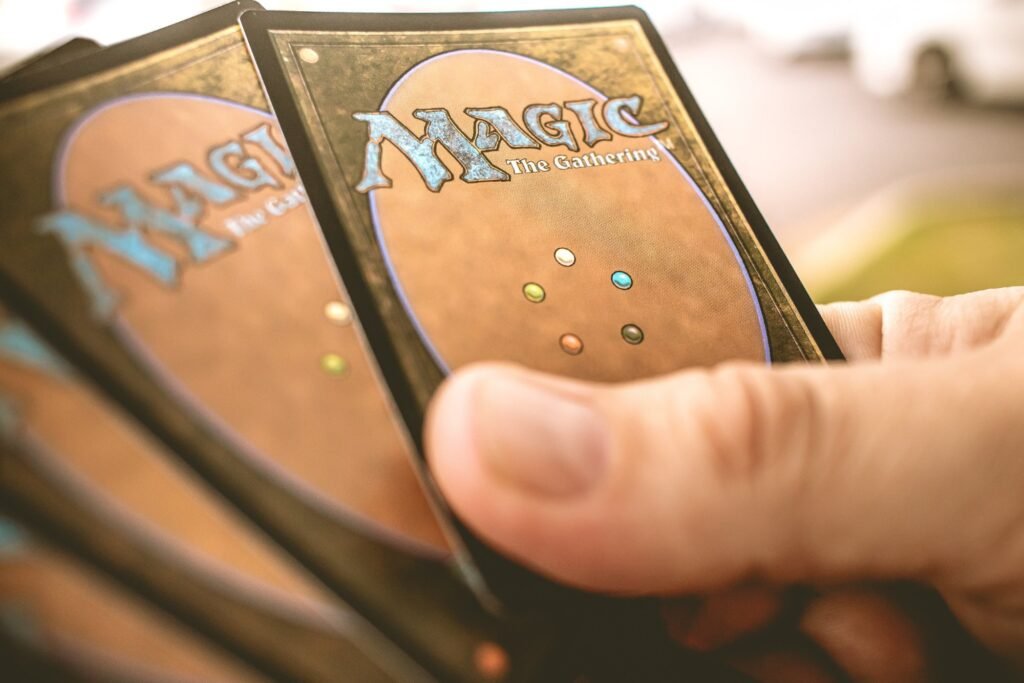
Cut quality is the sneaky one. People obsess about color, then they fan their deck and realize the borders are doing interpretive dance.
ProxyKing repeatedly emphasizes consistent cuts and alignment, and that matches what a lot of buyers report when they’re happy. When buyers aren’t happy, it’s usually one of these:
- A top border noticeably thicker than the bottom
- A stamp that’s “just a bit off”
- A single card in the batch that feels different (which is how marked-card paranoia starts)
If you’re the kind of person who notices centering on real cards, you will notice it on proxies too. ProxyKing tends to rate well here, but it’s not flawless.
Finish and shuffle feel (where “good” becomes “premium”)
This is a big part of why ProxyKing is considered top-tier in the US: the cards are made to handle like normal cards in sleeves.
That said, a third-party hands-on review noted a tactile difference: ProxyKing cards can feel slightly slicker than authentic Magic cards, even when the finish looks similar. In other words, they’ll look fine in sleeves, but if someone is rubbing cards like a weirdo detective, they might notice.
For most real tables, the important part is:
- Do they mash shuffle cleanly?
- Do they clump?
- Do they catch sleeves?
- Do they make the deck feel uneven?
ProxyKing’s reputation exists because, most of the time, the answer is “they shuffle like a deck.”
Holo stamps, foils, and “special treatment” proxies
ProxyKing sells a lot of foils and holo-stamp style products, including bundles where realism matters more (fetch lands, shocks, premium treatments).
Community feedback tends to split like this:
- Non-foil staples: usually the safest bet for consistency.
- Foils: can look great, but some people report variations in thickness or “over-foiled” glare on certain cards.
That’s normal in proxy land. Foils are harder to get right than people think.
Catalog and ordering experience
ProxyKing’s shop is huge, with thousands of listings and a lot of “high demand” staples and bundles. Pricing is typically around $4 per card, with many foils around $5, and bundles priced as sets.
The main upside: you can grab a small stack of high-impact cards fast without building a decklist file pipeline.
The main downside: it’s not designed for “proxy an entire deck cheaply.” This is the same conclusion most third-party reviews land on. ProxyKing shines when you’re buying a few cards you want to feel good in hand.
Shipping speed (why the “best in the US” label sticks)
A big part of ProxyKing’s US reputation is simple: they ship from the United States (Texas), and their published shipping policy aims for fast processing.
Their current shipping policy says:
- Most orders process within 1 business day (up to 3 in peak periods)
- Economy, Standard, and Express options are available
- Orders over a threshold may qualify for free shipping
- International shipping is available by request
Fast domestic fulfillment is a real advantage versus overseas options. Even if two printers have similar quality, getting your cards this week instead of “sometime after customs feels generous” changes how people talk about a seller.
Quality guarantee, reprints, and the “grown-up business” stuff
ProxyKing has a clear Quality Guarantee & Reprints page that spells out what they’ll fix: misprints, major color issues, severe banding, miscuts beyond tolerance, missing cards, wrong cards, and significant shipping damage. They also lay out what is not covered (minor variation, buyer’s remorse, and anything related to trying to misuse proxies).
This matters because a lot of proxy sellers run on vibes and Discord DMs. ProxyKing is trying to run like a normal store with documented policies. That helps the “top quality” reputation too, because quality is not just the print. It’s whether problems get resolved.
What real buyers say (good and bad)
This is where the “highest quality” claim gets tested.
Positive themes you’ll see:
- “Looks great in sleeves.”
- “Fast shipping with tracking.”
- “Saturation and borders look dead on for many cards.”
- “Holo stamp placement is good on several staples.”
Negative themes you’ll also see:
- “Some cards were washed out or too dark.”
- “Tracking and communication can be rough.”
- “Delivery times vary a lot.”
- “Inconsistent print runs across orders.”
So the honest takeaway is: ProxyKing has a strong reputation for realism and play feel, but it’s not immune to variance or customer service complaints. That’s true of basically every proxy seller, but it’s still worth saying out loud.
So… are they the highest quality proxies in the US?
Here’s my clean answer for this ProxyKing.biz review:
ProxyKing gets called “highest quality” in the US because they optimize for the stuff you actually notice during play: readability, consistent sizing, clean cuts, and a premium stock/finish that shuffles normally in sleeves, plus US-based fulfillment and real policies (shipping, quality guarantee, proxy use rules). That mix is rare.
But they’re also priced like a premium option. If you’re buying a handful of high-impact staples and you care about realism, ProxyKing’s reputation makes sense. If you’re proxying entire decks on a budget, you’ll probably want a different workflow.