
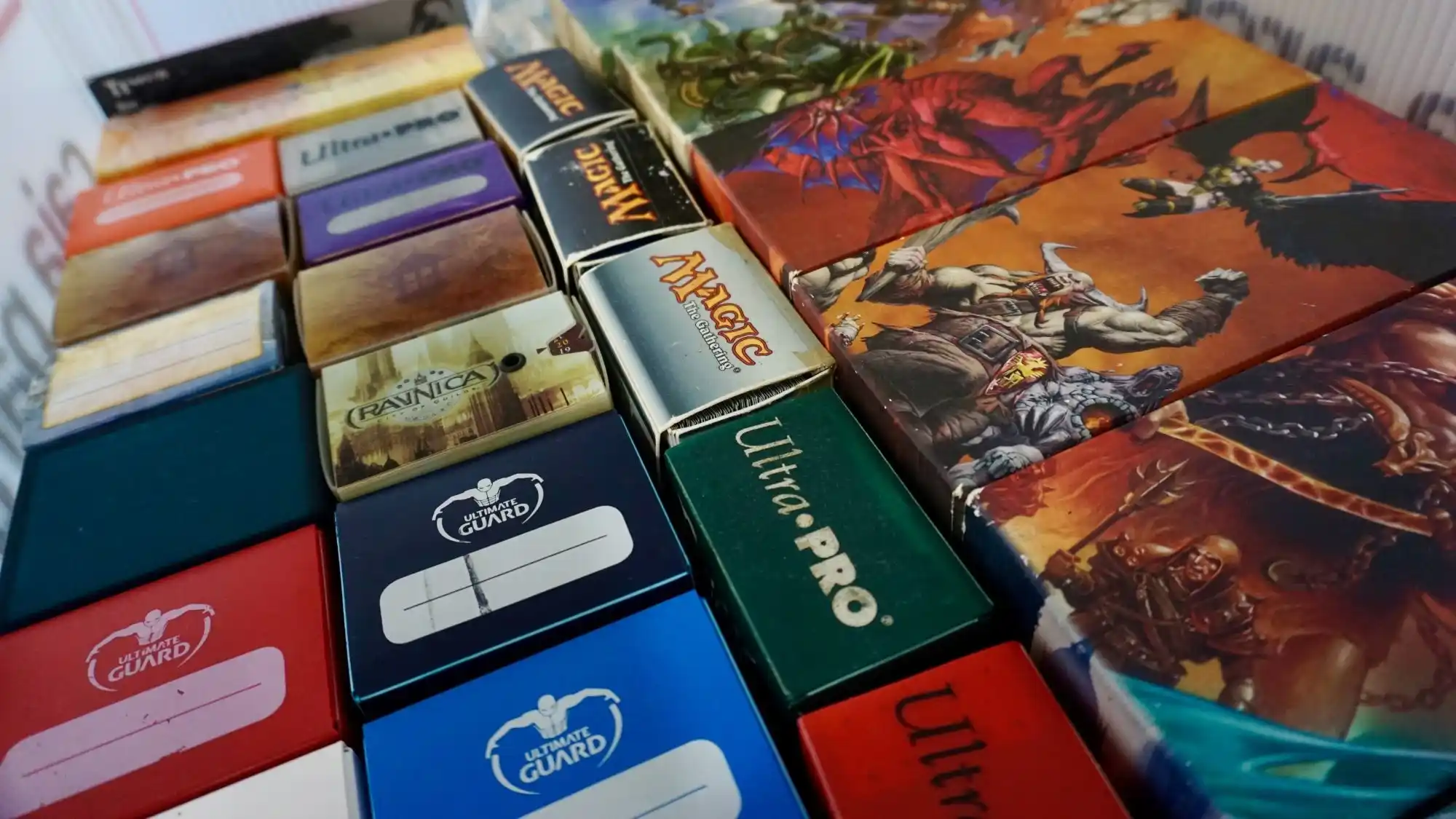
If you’re looking up MTG card size & dimensions, you’re probably doing one of three things: buying sleeves, setting up a print template, or trying to settle an argument that absolutely did not need to happen at 11:47 PM. (And yet, here we are.)
The good news: the “what size are MTG cards?” answer is simple. The slightly annoying news: the exact numbers you’ll see online can vary by a hair depending on whether someone is rounding, converting units, or measuring a card that’s been through 400 games and a mild emotional breakdown.
The quick answer: standard MTG card dimensions
Most Magic cards are “standard trading card” size, basically the same family as poker-sized playing cards.
- Width: about 2.5 in (about 63 mm)
- Height: about 3.5 in (about 88 mm)
So if you’re buying sleeves or deck boxes, you want standard size (not “Japanese/mini size”).
Standard MTG card size & dimensions (in inches, mm, cm)
Here’s the clean way to think about it:
- Inches (common shorthand): 2.5″ x 3.5″
- Metric (common print spec): 63 mm x 88 mm
- Centimeters: 6.3 cm x 8.8 cm
Those aren’t competing answers. They’re the same idea expressed in different units, with rounding involved.
“But i found 63.5 x 88.9 mm… so who’s lying?”
Nobody is lying. They’re rounding and converting.
A lot of “poker size” references use 2.5″ x 3.5″, which converts to 63.5 mm x 88.9 mm. Meanwhile, many TCG printers list “poker size” as 63 mm x 88 mm. The difference is 0.5 mm by 0.9 mm, which is tiny… until you’re doing precise cutting unsleeved and suddenly your deck feels like it has one card that ate its vegetables.
Practical advice:
- For sleeves, storage, binders: don’t sweat it. Standard sleeves fit.
- For print templates: follow the template your printer provides, and use bleed (more on that below).
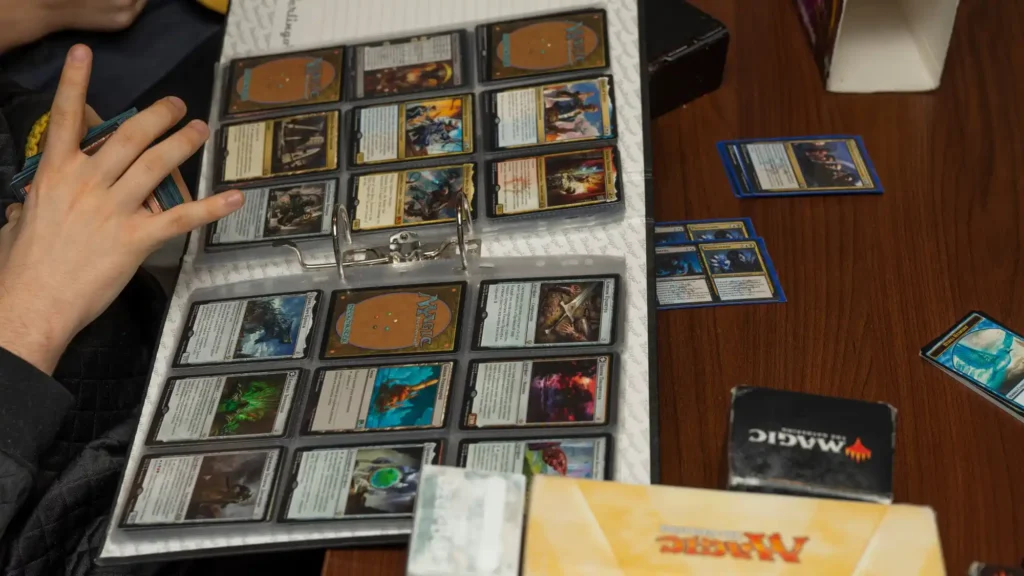
Sleeves: what size sleeves fit MTG cards?
For MTG, you want standard size sleeves. That’s the category used for MTG, Pokémon, Lorcana, Flesh and Blood, and most other “full size” TCGs.
Typical sleeve specs you’ll see:
- Fits cards up to about 63 x 88 mm
- Sleeve dimensions commonly around 66 x 91 mm (varies slightly by brand/model)
If you see Japanese size or mini sleeves, that’s for smaller cards like Yu-Gi-Oh (different ecosystem, different chaos).
Inner sleeves and double sleeving (the short version)
If you double sleeve:
- Inner sleeves fit tighter (they’re meant to hug the card).
- Outer sleeves are your normal “standard” sleeves.
If you’re not double sleeving, it’s fine. Your cards will not immediately dissolve into the table. (They’ll just slowly age like the rest of us.)
Deck boxes, binders, and storage
Because MTG uses standard trading card size, most accessory choices are straightforward:
- Deck boxes: Anything labeled “standard size TCG” will work.
- Binders/pages: “9-pocket” pages for standard trading cards fit MTG cards fine.
- Toploaders: Standard trading card toploaders fit, though some are snug depending on brand.
Where people get tripped up is when they buy something labeled “mini” or “Japanese size” because the product photo looked identical and they were feeling confident. Confidence is not a measurement system.
Printing templates: MTG dimensions in pixels, DPI, and bleed
If you’re printing proxies, custom cards, or just trying to make your file match what a printer expects, this is where the math matters.
Pixel dimensions at 300 DPI (common print baseline)
If you design at 63 mm x 88 mm:
- 63 mm is about 2.48 inches
2.48 x 300 = 744 px - 88 mm is about 3.46 inches
3.46 x 300 = 1039 px
So a solid working file size is about:
- 744 x 1039 pixels at 300 DPI (for the cut size)
If you design at 2.5″ x 3.5″ instead:
- 750 x 1050 pixels at 300 DPI
Both are “reasonable,” but don’t stop at the cut size if the card will be cut by a printer.
Bleed and safe zone (aka “why did my border get chopped?”)
Printers cut stacks of cards. Cutting is precise, but not magical. So you add:
- Bleed: extra image beyond the final cut line
- Safe zone: keep important text inside an inner margin so it doesn’t get trimmed
A very common guideline is:
- 1/8 inch bleed on each side
- another 1/8 inch safe margin inside the cut
That means your full art should extend past the edge, and your text should sit comfortably away from it.
If you want a “don’t make me think” path for proxy ordering (including proofing and avoiding the classic crop disasters), this Proxy Foundry posts is the next step:
What about tokens, oversized cards, and weird MTG extras?
Most MTG cards you shuffle into a deck are standard size.
But MTG also has nontraditional card formats: oversized cards, different backs, supplementary decks, and so on. If you’re printing or sleeving those, treat them as their own category and don’t assume “standard” will work.
Translation: if you’re holding something that looks too big to be a normal card, it probably is. Shocking, i know.
Are other TCGs the same size?
Proxy Foundry prints multiple games, and here’s the helpful part: most popular TCGs live in the same “standard size” neighborhood.
Typically standard size (similar to MTG):
- Pokémon
- Lorcana
- Flesh and Blood
- Android: Netrunner (and friends)
Common exception:
- Yu-Gi-Oh uses a smaller “Japanese/mini” size ecosystem.
So if you’re building storage or buying sleeves for multiple games, standard sleeves cover a lot of ground.
Quick cheat sheet
If you only remember one thing, remember this:
- MTG card size: about 2.5″ x 3.5″ (about 63 x 88 mm)
- Sleeves to buy: standard size
- Designing for print: use 300 DPI, and add bleed + safe margins
- If numbers differ slightly: it’s rounding. Your sleeves will survive.
And yes, knowing MTG card size & dimensions will save you time, money, and at least one argument that would have otherwise escalated into someone pulling out calipers “as a joke.”