
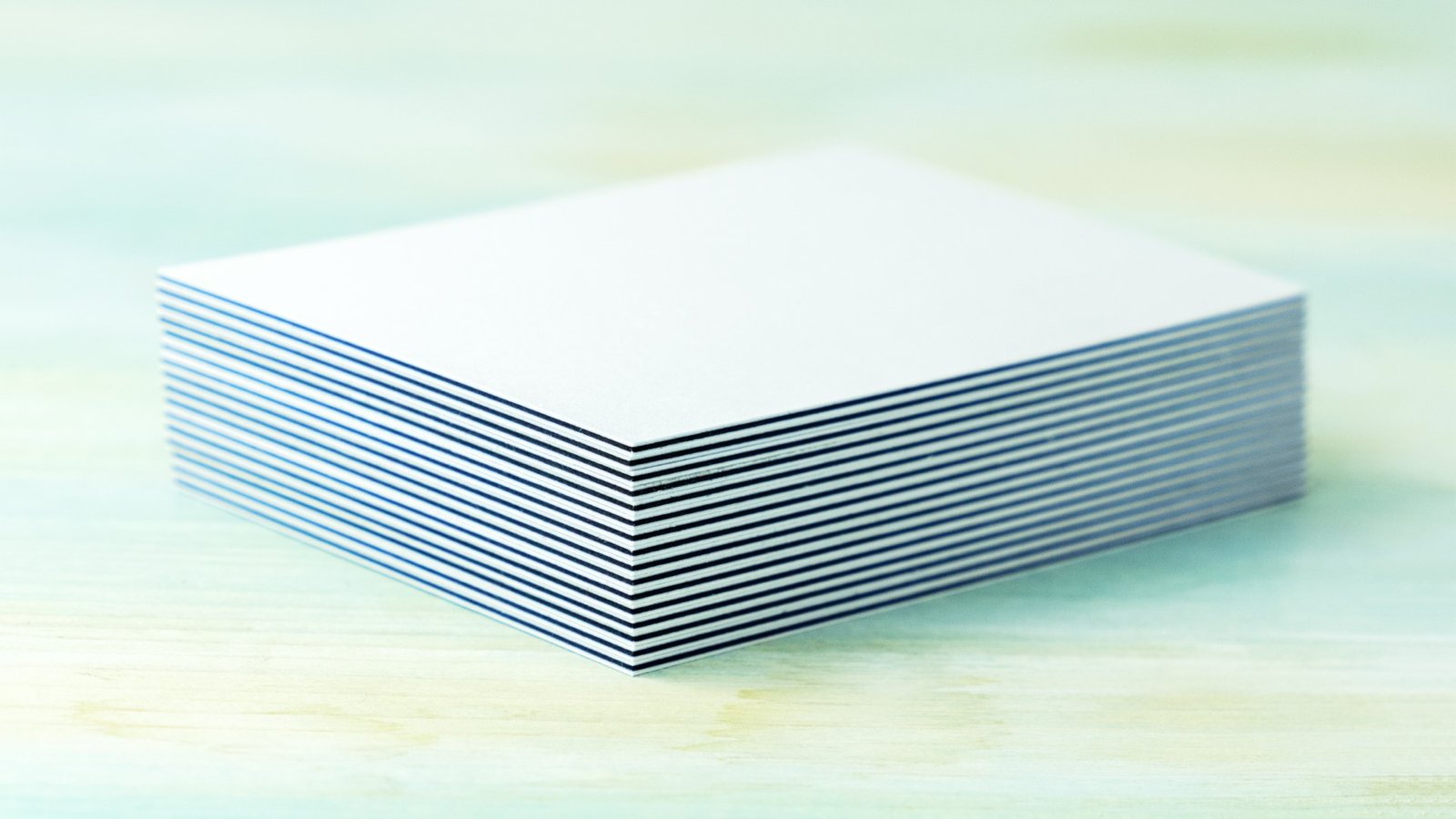
If you’re trying to choose the best cardstock for printing MTG proxy cards, you’re usually chasing one thing: a deck that shuffles, stacks, and handles like the real deal. Most proxy print disappointments aren’t caused by the art— they’re caused by stock choices (and sometimes cutting).
This guide breaks cardstock down into the stuff that actually matters in play: core (opacity), thickness, stiffness, surface finish, and cut consistency—plus a quick matrix you can use to pick the right option depending on how you play.
The quick pick (what most players should choose)
If you want proxies that feel close to real cards, aim for:
- Core: black core (or a true opaque core layer)
- Thickness: around 0.30–0.32 mm territory (close to typical MTG card feel)
- Finish: matte or satin for play readability
- Cut: consistent trimming and clean corners
That combo does the best job of making a deck feel uniform, especially when you shuffle a lot.
What “real deck feel” actually means
A deck feels “right” when four things line up:
1) Thickness (caliper), not just weight (GSM)
People love quoting GSM because it’s easy to see on product pages, but GSM is weight, not thickness. You can get a heavy stock that still feels off, or a lighter stock that feels surprisingly snappy.
If you can only pick one spec to anchor on, pick thickness.
2) Stiffness (how it bends and springs back)
This is the “snap” factor. Too stiff feels like packaging board. Too soft feels like flyers. Sleeves hide some of this—not all.
3) Surface finish (how it shuffles, reads, and fingerprints)
Finish changes:
- how smoothly the deck shuffles
- how readable cards are under bright lights
- how quickly the cards start looking handled
4) Cut quality (consistency + corners)
Even perfect stock feels bad if the trim is inconsistent. A deck where half the cards have slightly different corners or slightly different size will shuffle differently—and you’ll feel it every game.
Black core vs non-core cardstock
A card “core” is an opaque layer between the front and back sheets. Its job is simple: stop light from shining through and prevent the front/back from ghosting.
Why black core is the premium default
- Opacity: black core does the best job preventing show-through under bright light
- More uniform feel: core stocks are often engineered specifically for playing-card handling
- Peace of mind: even if you only play casually, nobody wants a deck that looks translucent or uneven under lighting
When non-core can still work
Non-core stocks can be fine if:
- you always play sleeved
- your sleeves are fully opaque
- you’re printing short-term test decks and you care more about speed than perfect feel
That said, if your goal is “closest to real,” black core is the simplest way to stop fighting physics.
Thickness and weight: numbers you can actually use
You’ll commonly see 300gsm, 310gsm, 330gsm, 350gsm. Those numbers can be helpful, but remember: GSM is not a guarantee of thickness or stiffness.
A practical way to think about it:
- ~300gsm: good for budget prints and testing (especially sleeved)
- 310–330gsm + core: the sweet spot for “close to real deck” handling
- ~350gsm: can feel premium and rigid, but sometimes starts feeling a bit chunky depending on finish and cut
If you’re measuring thickness (caliper), many players are happiest when they land around that 0.30–0.32 mm neighborhood for general play feel.
Matte vs gloss finish
Finish is not just “what looks nicer.” It’s how the cards behave in real life.
Matte
Best for play.
- Low glare (huge under overhead LEDs)
- Easier to read across the table
- Better at hiding fingerprints
Tradeoff: matte can look slightly less “punchy” in photos.
Gloss
Best for visual pop.
- Colors and art look vibrant
- Great for gifts, showcase cards, display pieces
Tradeoff: glare can be brutal and fingerprints show quickly.
Satin / semi-gloss
Often the best compromise:
- less glare than full gloss
- still has some richness in color
- tends to shuffle nicely
If you’re choosing for gameplay, matte or satin is usually the safe call.
Sleeved vs unsleeved: choose your standard
This is where people overbuy the wrong features.
If you play sleeved (most players)
Prioritize:
- Thickness
- Cut consistency
- Print clarity
- Opacity/core (especially if sleeves aren’t fully opaque)
Finish matters less because the sleeve becomes the surface you’re touching. But thickness and cut still matter a lot.
If you play unsleeved
You’re basically stress-testing your proxies. Prioritize:
- Durable finish
- High opacity/core
- Cut quality
- Scuff resistance
Unsleeved play makes every difference more noticeable: edges, corners, surface texture, and wear.
Two quick tests when your cards arrive
No special tools needed.
1) The light test
Hold a card up to a bright light. If you can easily see the back bleeding through the front (or vice versa), it’s going to feel lower quality and less uniform in a stack.
2) The shuffle test
Sleeve 10 proxies and 10 real cards (or 10 known-good cards), then mash shuffle. If the proxies feel thinner, softer, or noticeably different, you’ll notice it constantly in actual play.
Quick recommendation matrix
Use this to pick the “right” cardstock for your use case.
Cube
- Pick: 310–330gsm + black core + matte/satin
- Why: cube cards get handled endlessly and you want uniform feel across the pool.
Commander staples pool (your reusable “good stuff” box)
- Pick: 310–330gsm + black core + matte/satin
- Why: these get moved between decks and shuffled constantly.
Testing stack (short-term brewing)
- Pick: ~300gsm (core optional) + matte, played sleeved
- Why: speed and clarity matter more than premium handling.
Gift custom card (alt-art, inside joke, special occasion)
- Pick: black core + satin or gloss
- Why: visual impact is the priority and it’s usually not being shuffled every week.
What this means for “best cardstock for printing MTG proxy cards”
If you want proxies that play like a normal deck, the most reliable “no regrets” target is:
Black core + ~0.30–0.32 mm feel + matte/satin + consistent cutting.
If you’re building a guide ecosystem for Proxy Foundry, this is also a great place to funnel readers into:
- your “where to buy” guide (for shopping decisions)
- your quality/print expectations page (for trust and standards)
FAQ
Is black core required?
No. It’s just the easiest way to get high opacity and consistent feel. If you always use opaque sleeves, you can be more flexible.
What finish is best under bright lights or webcam?
Matte or satin. Gloss can look amazing… until glare makes half your board unreadable.
Will sleeving hide cardstock differences?
It helps a lot, but it won’t fix thin stock, translucent stock, or inconsistent cutting.
Does “real-feeling” cardstock automatically mean counterfeit intent?
No. Stock specs are about handling and durability. The line gets crossed when the goal is deception or resale as authentic product—don’t do that.