
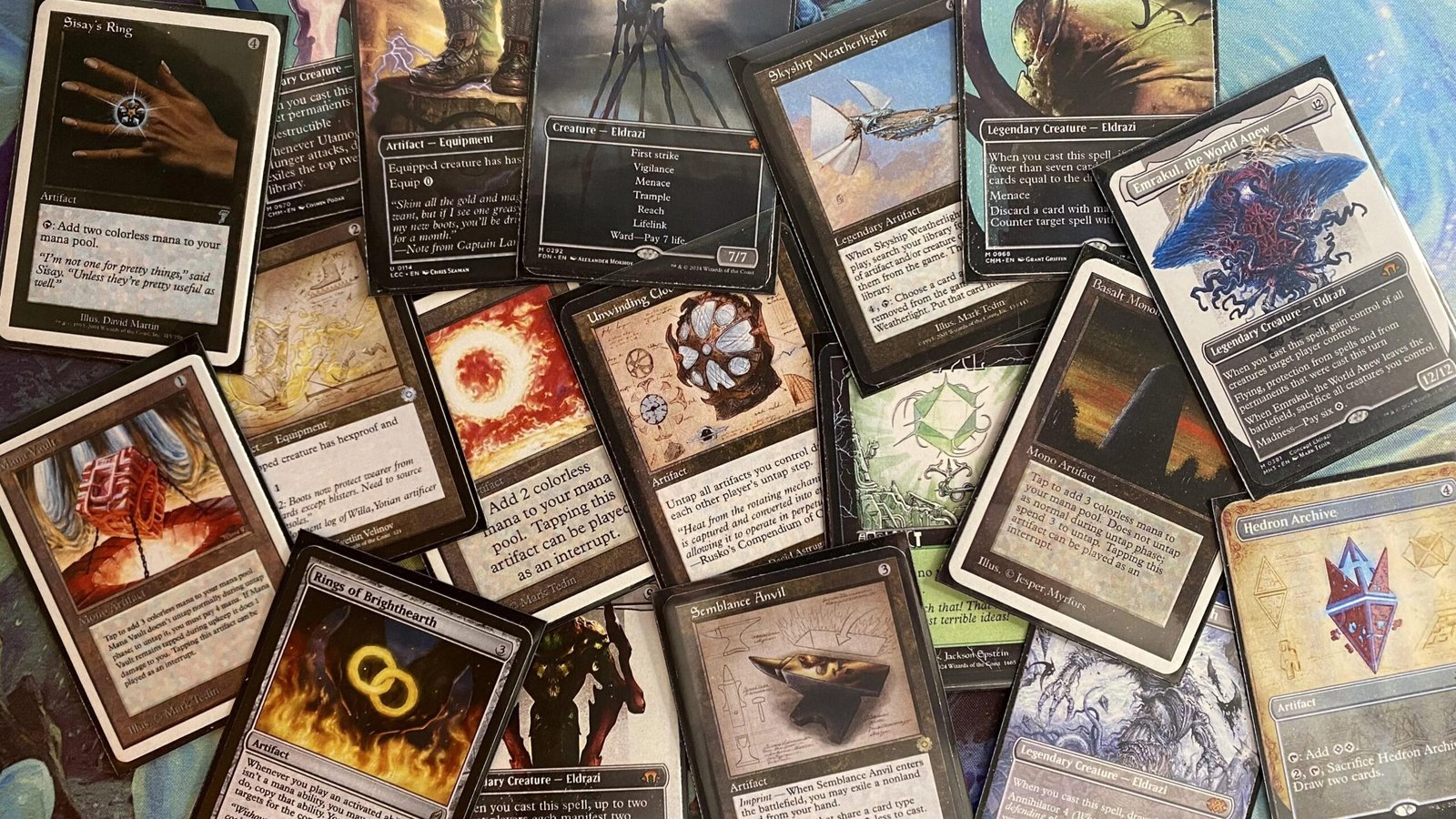
If you’ve ever shown up to Commander night with a fresh stack of proxies and immediately felt like you needed to explain your entire moral philosophy, this is for you. A proxy labeling standard for commander exists for one reason: reducing awkwardness. The goal is not to turn your deck into a legal document. It’s to make it obvious your cards are play pieces, not merchandise.
And yes, this also helps you avoid the one outcome everyone hates: someone mistaking your proxies for real cards later. Not because you’re trying to scam anyone, but because humans are very good at misplacing things and then making it everyone else’s problem.
What “proxy” means here (and what it doesn’t)
In casual play, most people use “proxy” to mean “a stand-in so I can play the game.” In sanctioned play, “proxy” has a much narrower meaning: judge-issued replacements for damaged cards during the event.
So this article is about casual, unsanctioned play. Kitchen table. Commander nights where the store is basically just hosting a bunch of goblins (affectionate) shuffling cardboard.
If you’re going to play in anything sanctioned, don’t bring home-made proxies and assume it’s fine because you “own the card.” Tournament policy does not care about your binder’s feelings.
The goal of labeling: clear outside the game, invisible during the game
A good labeling standard does two things:
- Prevents confusion later (trades, collections, deck swaps, lost cards, “hey whose deck is this?” moments).
- Does not create marked cards (anything you can spot or feel while the card is face-down can accidentally become an advantage).
That’s why the best standard isn’t “write PROXY in Sharpie on the sleeve front.” That solves confusion and creates a different problem.
The 3-part standard (simple enough to actually use)
Here’s the proxy labeling standard for commander I recommend because it’s practical and hard to mess up.
1) Back of card: one clear statement
Put this on the back, somewhere obvious:
PROXY / NOT FOR SALE
If you use opaque sleeves (you probably do), this won’t affect gameplay at all. But the moment the card leaves the sleeve, it’s unambiguous. That’s what you want.
If you’re printing custom backs, even better: don’t use an official card back at all. A custom back that literally says “Proxy” is the cleanest “nobody can confuse this later” option.
2) Front of card: one subtle marker
This is optional, but helpful when you’re playing with new people or at a store.
Add a small “PROXY” tag in one consistent spot, like bottom-left margin or under the rules text box. Keep it legible, but not huge. Think “tiny watermark,” not “billboard.”
This answers the common question: should proxies say “proxy” on the front?
My take: if you only play with close friends, you can skip it. If you play with strangers, the tiny front label prevents the “wait, are these real?” pause that shows up right when someone is trying to decide whether to counter your spell.
3) Deck-level disclaimer: a slip in the deckbox
This is the part people skip, and it’s the part that makes you look like you have your life together.
Put a small printed note in the deckbox that says the deck contains proxies and they’re not for sale. If a card goes missing and turns up later, the note tells the future finder what it is without a whole conversation.
This also gives you a “single point of disclosure” if you don’t want to label every single card face.
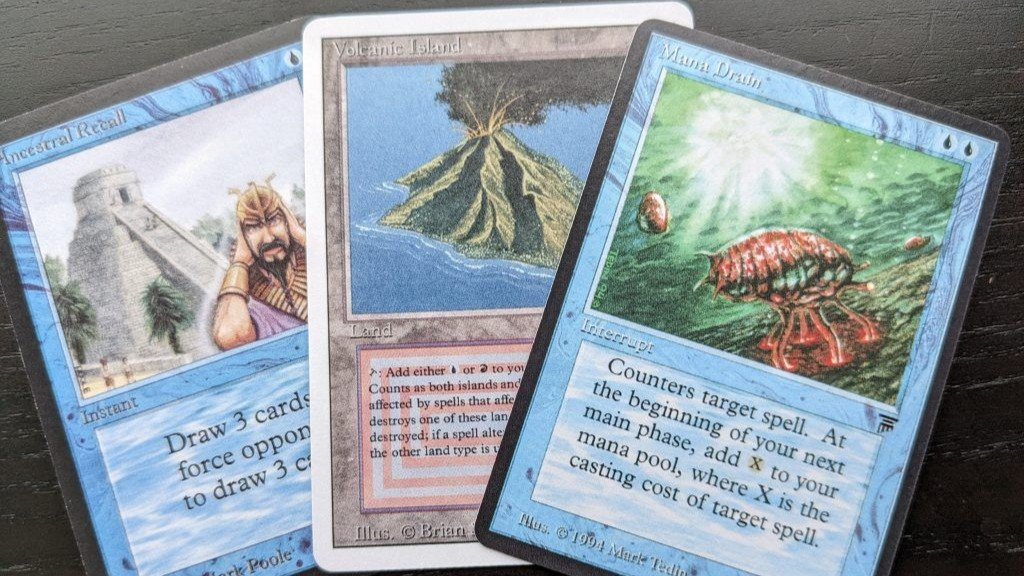
“mtg proxy cards labeled not for sale printing” (the easiest way to do it)
If you searched mtg proxy cards labeled not for sale printing, you probably want the quickest method that still looks clean.
Three easy options:
- Rubber stamp on the card back: fast, consistent, and weirdly satisfying.
- Small sticker on the inner sleeve (not the outer sleeve): avoids sticky edges and keeps the outside uniform.
- Printed back design that already includes “PROXY / NOT FOR SALE”: best for large batches.
Avoid putting thick stickers on the outer sleeve. You will eventually feel the ridge while shuffling, and then you’ve invented marked cards. Congrats on the new unforced error.
Best way to mark proxies in sleeves (without creating marked cards)
If you want a sleeve-based method, here are the safest approaches.
Safer sleeve marking (recommended)
- Inner sleeve mark only: a tiny “P” in the same corner of the inner sleeve for every proxy. Inner sleeves are uniform, and the mark is not raised.
- All-proxy deck uses one sleeve color: if the whole deck is proxied, uniform sleeves solve most issues and you don’t need per-card marks.
- Deckbox insert only: if your proxies are high-quality and uniform, the deck-level insert is often enough.
Sleeve marking to avoid (usually a bad idea)
- Raised stickers, tape, or anything you can feel.
- Random corner dots that aren’t consistent across the deck.
- Mixing different sleeve brands or wear levels when only some cards are proxies.
Yes, you can do whatever you want at home. But if you’re trying to follow a standard, pick a method that doesn’t accidentally turn into “I can always cut to my Sol Ring, somehow.”
Printable proxy disclaimer insert (copy and print)
Below are a few “printable proxy disclaimer insert” options. Drop one into your deckbox. Trim it to size. Feel mildly superior.
Option A: minimal (works everywhere)
This deck contains proxy cards for casual playtesting.
Not for sale. Not tournament legal.
Option B: store-friendly (extra explicit)
Proxy cards inside (casual play only).
Not for sale or trade as authentic cards.
Use allowed only with organizer/playgroup permission.
Option C: if you lend decks a lot
Loaner deck: contains proxies.
Please keep sleeved.
Not for sale. If found, return to owner.
If you want to be extra organized, put your name or a contact handle on the insert. Not because you’re planning to lose cards, but because the universe enjoys irony.

Quick reality check for Commander pods and game stores
A proxy labeling standard for commander is not a substitute for asking. It just makes the asking easier.
If you’re joining a new pod:
- Mention proxies up front.
- Keep the labels clear.
- Match the table’s vibe. If everyone else is on precons, don’t be shocked when your proxied cEDH opener gets a reaction.
If you’re playing at a store, it helps to know the difference between a casual meet-up and an event the store is running officially. If you need a refresher on formats and where people tend to be stricter, Proxy Foundry’s Beginner’s Guide to Formats: Standard vs Modern vs Pioneer vs Commander is a handy reference.
And if your proxy plan involves ordering printed cards, you may also care about consistency and turnaround (because nothing says “great night” like your deck arriving two days late). See PrintMTG vs PrintingProxies: which proxy card printer is better?.
The standard in one sentence
If you only remember one thing: label the back clearly, optionally tag the front subtly, and keep a deckbox insert. That’s it. That’s the whole proxy labeling standard for commander.
It’s not about permission slips. It’s about preventing misunderstandings, protecting everyone involved, and keeping casual play casual.
Wizards of the Coast, “On Proxies, Policy, and Communication” (Jan 14, 2016). MAGIC: THE GATHERING