

Secret Lair proxies are where optimism goes to get humbled. A normal frame proxy is pretty forgiving. A Secret Lair drop with custom art, unusual styling, and a special foil treatment is basically asking your printer to recreate a Magic card that was designed to be hard to recreate. That’s the point. That’s why people buy them.
If you want Secret Lair proxies that look good and play clean, you need to know what usually goes wrong, and which details are worth caring about.
Secret Lair, in practical terms
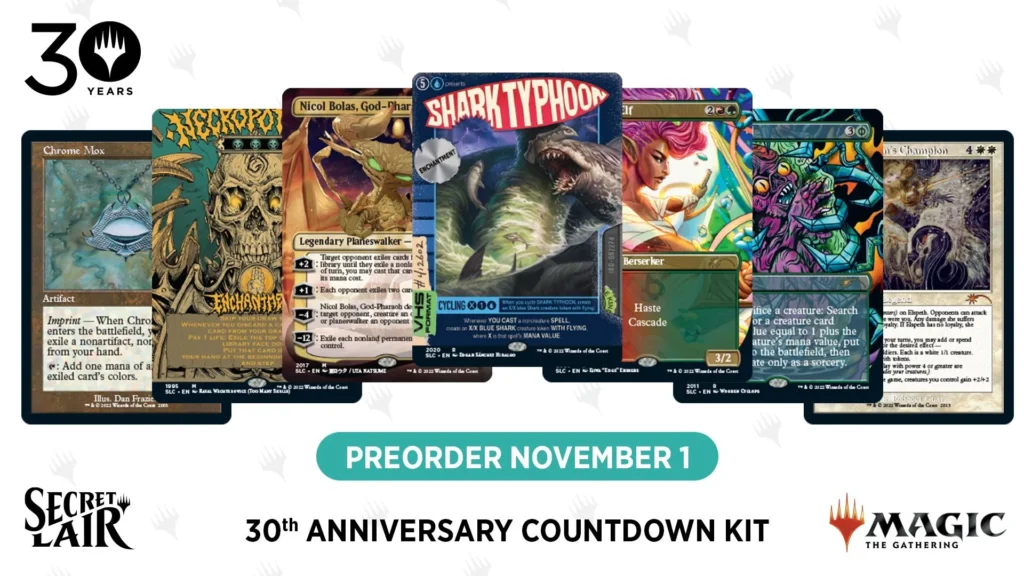
Secret Lair is a Wizards product line built around curated “drops,” often with unique art and collectible treatments. A lot of drops are limited print run (pre-printed) to speed up shipping, and some have multiple foil options. If you’ve ever wondered why the same drop can look noticeably different in foil vs etched foil, it’s because it is. That’s not you being picky. That’s literally how it’s made.
So when someone says “I want this Secret Lair version as a proxy,” the real question is: which part are you trying to match?
- The art
- The frame and layout
- The finish (traditional foil, foil etched, rainbow foil, raised foil)
- The overall vibe, without trying to recreate physical effects perfectly
For casual play, the first three matter. The last one is where people accidentally turn their proxy order into an emotional journey.
The big mismatch: prints vs physical treatments
A proxy can match the image. It cannot reliably match “foil texture,” “raised foil,” and other physical print innovations. If you want a proxy that feels identical to a premium collectible treatment, you’re trying to print a tactile effect with ink on paper. That’s not a moral failure, it’s just physics.
Wizards describes differences between traditional foil and foil etched in their own Secret Lair support material, and it’s a useful reminder that these treatments are not interchangeable even in official product. If official versions differ, a proxy version is not going to magically unify them.
The practical takeaway
If you’re making Secret Lair proxies for play, decide which of these you care about most:
- Play clarity (text readable, art not muddy, no glare nightmares)
- Art fidelity (the illustration is the “point”)
- Frame accuracy (looks like the Secret Lair drop, not “generic proxy”)
Trying to also match physical foil behavior is how you end up disappointed at a piece of paper for being paper.
What imports usually get wrong (the list you came for)
When people order special-frame proxies from random sources, the failures are surprisingly consistent.
1) Cropping and bleed failures
Special frames, borderless art, and full-art designs make crop errors obvious. If you’re off by a little, it’s not “slightly off-center.” It’s “why is the border thicker on the left like it’s leaning.”
What this looks like:
- important frame elements clipped
- art shifted up or down
- borders uneven in a sleeved deck
- text or mana symbols too close to the edge
If you want to avoid this, the boring solution is still the solution: build files with proper bleed and safe margins, and proof at actual size. This is the part most people skip because they’re excited. Understandable. Still a mistake. Use this as your baseline: Best File Settings for Print-Ready MTG Proxies.
2) Contrast and “looks cool, reads badly”
A lot of Secret Lair art is high-style. Some drops use minimal text boxes, unusual colors, or backgrounds that make black text harder to read.
Imports often make this worse by:
- printing too dark (shadow crush)
- losing fine lines
- softening text edges through compression
- turning subtle gradients into muddy blocks
If you’re ordering proxies for play, prioritize versions where the rules box stays readable. You can love the art and still want to read your own card.
3) Foil expectations that don’t match reality
Secret Lair includes multiple foil types, and Wizards explicitly calls out differences like smooth rainbow holographic pattern vs textured foiling for etched. Proxies rarely replicate this accurately, and even when a print service offers “foil,” it’s often a different technique than official product.
So the usual import failure isn’t “bad foil.” It’s “promised a foil vibe, delivered glare.”
If you care about play readability, matte or satin finishes are usually safer for sleeved play. If you care about visual pop for a few showcase cards, gloss might be fine, just know what you’re trading for.
The cardstock and finish side matters more than people expect, even with sleeves. If you want the physical side to feel consistent in a deck, start here: Best Cardstock for MTG Proxy Cards.
4) Fonts and layout “close enough” weirdness
Special frames often include unique typography choices, but imports frequently:
- substitute a similar but wrong font
- misplace typographic elements by a few pixels
- blur small text through low-res sourcing
- distort the title line spacing
It’s subtle until you’ve seen the real thing. Then it becomes impossible to unsee. Like a crooked picture frame in your friend’s house.
5) Special frame micro-details that are hard to fake cleanly
These are the things people notice when they’re already mad:
- wrong set symbol shape or placement
- incorrect collector info styling
- mismatched border thickness
- inconsistent corner rounding feel in a stack
The fix is not “become a perfectionist.” The fix is “decide which details matter for your use case.”
A table for deciding what to care about (so you stop caring about everything)
| Secret Lair element | Why it goes wrong | Best proxy-friendly approach |
|---|---|---|
| Borderless / full-art | crop drift becomes obvious | use proper bleed, proof crop |
| Stylized frames | contrast drops, text softens | prioritize readable text box |
| Foil etched vs traditional | different physical texture | match art and layout, accept finish difference |
| Raised foil treatments | tactile effect, not just ink | don’t try to “match” it, choose a clean non-foil or standard finish |
| Ultra fine line art | compression and print softening | use high-res sources, avoid heavy JPEG |
Yes, it’s “less romantic” than chasing the exact collectible vibe. It’s also how you get cards you enjoy playing with.
A simple workflow for Secret Lair proxies that don’t disappoint
If you want a low-drama approach:
- Choose the exact art and layout first. That’s your anchor.
- Pick a print-friendly finish for play. If glare bothers you, don’t order a glare magnet.
- Proof at actual size. Read the text at arm’s length, not at 400% zoom like a raccoon inspecting trash.
- Keep the deck consistent. If only 3 cards are special frames and the other 97 are standard, it can look… odd. Sometimes that’s fine. Sometimes it’s distracting.
If you do want to mix special frames into an otherwise normal deck, one trick is to reserve them for:
- commanders
- signature pet cards
- high-impact staples you want to “feel special”
That way the mismatch reads as intentional.
Final thought: “usually gets wrong” is not a mystery, it’s a pattern
Secret Lair proxies are hard because Secret Lair cards are designed to be collectible and visually distinct. The mistake is assuming any print source will nail that by default.
Pick what matters, prep files correctly, and optimize for play clarity unless your real goal is “look at this cool thing.” That goal is valid too. It just comes with different tradeoffs.